The preprocessing workflow
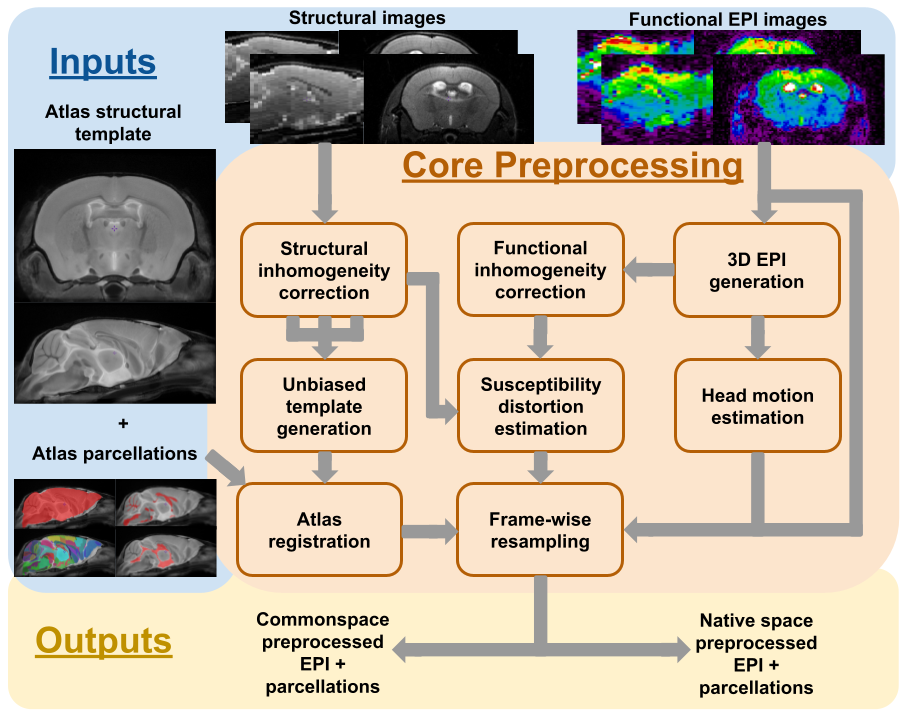
Fig. 16 The RABIES preprocessing workflow.
Preprocessing fMRI scans prior to analysis requires, at minimum, anatomical alignment of scans to a common space, head realignment to correct for motion, and correction of the susceptibility distortions arising from the echo-planar imaging (EPI) acquisition of functional scans. The core preprocessing pipeline in RABIES carries out each of these with state-of-the-art processing tools and techniques.
Alignment to the common space
Structural images, acquired alongside the EPI scans, are initially corrected for inhomogeneities (Structural inhomogeneity correction) and then registered together so that different MRI acquisitions can be aligned.
That registration works by generating an unbiased, data-driven template (Unbiased template generation) through the iterative non-linear registration of each image to the dataset consensus average, where the average is updated at each iteration to provide an increasingly representative dataset template (optimized_antsMultivariateTemplateConstruction; [ATS+11]).
The finalised template, after the last iteration, provides a representative alignment of each MRI session to a template sharing the acquisition properties of the dataset — brain shape, field of view, anatomical contrast — which makes it a stable registration target for cross-subject alignment. This newly-generated unbiased template is then itself registered to an external reference atlas (Atlas registration), which supplies both an anatomical segmentation and a common space comparable across studies.
Note
This is why RABIES builds a study-specific template rather than registering
every scan directly to the atlas: the intermediate target resembles your data,
so each individual registration has less work to do and is less likely to
fail. The cost is computation time, which is why fast_commonspace=true
exists to skip it.
EPI motion and distortion corrections
A volumetric EPI image is first derived using a trimmed mean across the EPI frames, after an initial motion realignment step (3D EPI generation). Using this volumetric EPI as a target, the head motion parameters are estimated by realigning each EPI frame to the target with a rigid registration (Head motion estimation).
To correct EPI susceptibility distortions, the volumetric EPI is first subjected to an inhomogeneity correction step (Functional inhomogeneity correction), then registered non-linearly to the anatomical scan from the same MRI session, which yields the geometrical transforms required to recover brain anatomy [WPG+17] (Susceptibility distortion estimation).
Derivation of preprocessed EPI timeseries
The transforms providing head motion correction, susceptibility distortions
and alignment to the common space are concatenated into a single resampling operation
— avoiding multiple resampling — applied at each EPI frame [EMB+19] (Frame-wise resampling).
This generates the preprocessed EPI timeseries in common space, while alternatively
the transforms to common space can be dropped to generate instead native space timeseries
using the --resampling_space parameter.
Important
Concatenating the transforms matters. Resampling an image is lossy, so applying motion correction and then distortion correction as two separate resampling steps blurs the data twice. RABIES composes the transforms first and resamples once.
Working without structural scans
Structural scans are recommended but not required. An alternative workflow,
selected with --bold_only, preprocesses an input dataset containing only EPI
functional images.
In this workflow the volumetric EPI corrected during Functional inhomogeneity correction replaces the structural image for the purpose of common space alignment, and is used to generate the unbiased template, which is in turn registered to the reference atlas. This final registration to the atlas accounts for the estimation of susceptibility distortions, in place of the registration to a same-session structural image.
Note
When using the RABIES default mouse atlas, --bold_only also switches the
default template to an EPI reference template, which is a more robust target
for EPI registration than a structural reference.
See also
Preprocessing QC outputs — how to verify each step succeeded
How to troubleshoot registration — what to do when one did not
Workflow reference — the source docstrings for every module above